
Why Choose an Artificial Christmas Tree? 10 Benefits That Make the Switch Worth It
Written by Matt W on 29th Sep 2025.
Key Takeaways
- 67% of UK households now choose artificial Christmas trees, making them the clear favourite over real trees.
- Artificial trees searched 20,000 more times than real trees in November 2021, showing growing preference.
- Fire safety advantage: Real trees cause over 200 house fires annually, while artificial trees are flame-resistant.
- Cost savings of £300-£1200 over 10 years compared to buying real trees annually.
- Zero maintenance required: No daily watering or needle cleanup for busy families.
- Perfect for allergy sufferers: Eliminates Christmas Tree Syndrome caused by mould and dust.
- Environmental winner: Lower carbon footprint when used for 7+ years (most last 10-15 years).
- Consistent beauty: Same perfect shape and fullness every single year.
- Easy storage: Packs away neatly for decades of reuse.
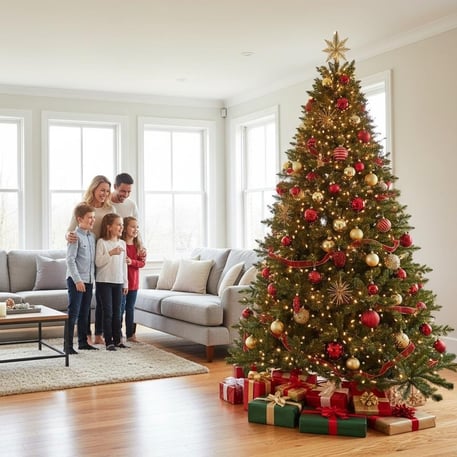
Christmas morning wouldn't be complete without a stunning tree as your festive centrepiece. But here's what might surprise you: 67% of UK households have already made the smart switch to artificial Christmas trees, and the trend shows no signs of slowing down.
As someone who's been in the Christmas tree business for over 15 years, I've watched this transformation happen firsthand. What started as a practical choice for busy families has become the preferred option for British households who want all the Christmas magic without any of the hassle.
The numbers tell the story clearly - artificial trees generated 20,000 more online searches than real trees in November 2021. From Liverpool (the UK's most festive city with 93% of households having trees) to Brighton, families are choosing convenience, safety, and long-term value.
Let me share why artificial Christmas trees have become Britain's favourite Christmas tradition.
Artificial Trees Are Stunning
The days of obviously fake-looking Christmas trees are long gone. Today's premium artificial trees use cutting-edge needle technology that creates incredibly realistic textures, colours, and natural variations that rival any freshly cut pine.
I remember a customer last year who brought her mother to see our realistic artificial Christmas trees. The older lady ran her hands through the branches, convinced we were trying to sell her a real tree! The secret lies in mixed needle construction - soft PE needles for that authentic feel combined with fuller PVC branches for volume.
Modern artificial trees maintain their perfect shape throughout the entire festive season. No drooping branches, no bare patches developing, no yellowing needles. Your tree looks as magnificent on Twelfth Night as it did on setup day. This consistency is something real trees simply can't match.
The variety available is remarkable. Want that magical snow-dusted look? Snowy artificial trees create instant winter wonderland vibes. Need something for a compact space? Slim designs fit perfectly in modern UK homes without sacrificing visual impact. From traditional deep green to contemporary frosted finishes, there's an artificial tree to complement every décor style.
The quality has improved so dramatically that 75% of households now prefer artificial trees over real ones. Premium trees feature multiple needle types, realistic branch structures, and even subtle colour variations that mirror nature's own designs.
Convenience
December is hectic enough without adding tree shopping stress to your already packed schedule. With an artificial tree, you eliminate the annual trek to overcrowded garden centres, the struggle to fit a massive tree in your car, and the race against time before the best specimens disappear.
One of my regular customers perfectly summed this up: "I used to spend an entire Saturday every December dealing with tree shopping - driving around different places, arguing with the family about which tree looked best, wrestling it home, then spending hours getting it positioned properly. Now I'm decorated and relaxed while my neighbours are still tree hunting."
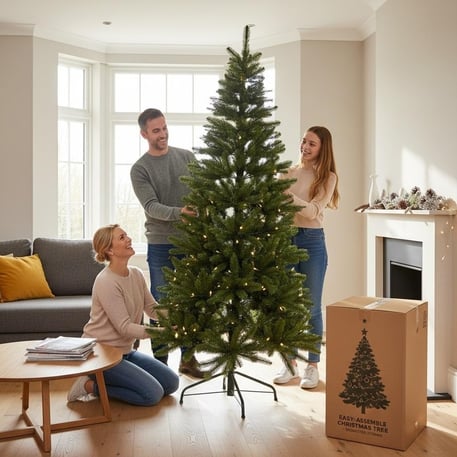
Modern artificial trees are engineered for effortless setup. Most quality models break down into just 2-3 sections that connect securely without tools. No more crawling under branches trying to tighten bolts while getting stabbed by pine needles. The whole process takes 30-45 minutes from box to fully decorated tree.
Storage is equally straightforward. Your tree packs away into its original storage box or bag, ready for the loft until next year. Compare this to the annual disposal challenge of real trees - dragging them through your house, hoping council collection works, or making another trip to the recycling centre.
Pre-lit artificial trees take convenience even further. Professional light placement means perfect illumination without the frustration of untangling cables or finding dead bulbs. The lights are tested before leaving the factory, so you know they'll work perfectly every year.
The convenience factor extends to timing too. Want your tree up in early November? No problem with artificial. Planning to keep decorations until late January? Your artificial tree will look perfect throughout, while real trees would be dropping needles and becoming fire hazards.
Easier to Decorate
Decorating should be the magical part of Christmas preparation, not a frustrating battle against nature. Artificial trees transform the decorating experience into pure enjoyment.
The branches are perfectly positioned and sturdy enough to support all your favourite ornaments. Unlike real trees with weak or oddly angled branches, artificial trees provide consistent, reliable decoration points throughout. Heavy baubles, family heirlooms, children's handmade decorations - everything hangs beautifully without causing branch droop.
No more bloodied fingers from sharp pine needles or sticky sap permanently bonding to your Christmas ornaments. I've seen insurance claims for damaged heirloom decorations caused by pine resin - something that never happens with artificial trees.
The branch spacing is optimised for decoration placement. Real trees often have awkward gaps or overly dense areas that make balanced decoration difficult. Artificial trees provide consistent, workable spacing that lets you create picture-perfect displays.
Pre-lit Christmas trees revolutionise the decorating process. Professional light distribution means no dark spots, no tangled wires, and no electrical nightmares. The lights are positioned for optimal coverage and tested for safety - something impossible to achieve with DIY lighting on real trees.
Children love decorating artificial trees because there's no worry about sharp needles or unstable branches. Families tell me their decorating time has become more enjoyable and relaxed since switching to artificial - it's about creating memories, not managing tree-related stress.
Investment Purchase
The financial benefits of artificial trees become compelling once you examine the real numbers. While the upfront cost seems higher, the long-term savings are substantial.
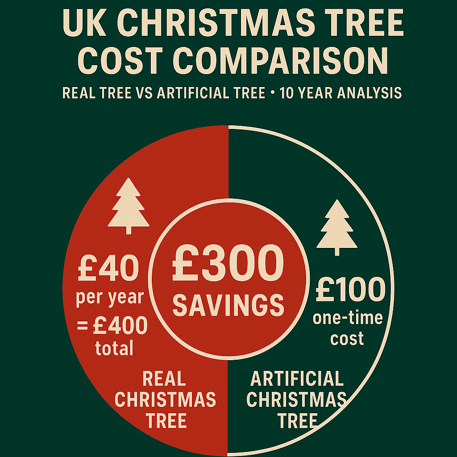
A quality real Christmas tree in the UK costs £40-£150 annually. Over a decade, that's £400-£1500 spent on trees that become garden waste each January. Premium artificial trees cost £100-£300 initially but last 10-20 years with proper care.
Here's the real cost breakdown:
| Time Period | Real Tree Annual Cost | Total Real Tree Cost | Artificial Tree Cost | Cumulative Savings |
|---|---|---|---|---|
| Year 1 | £35 | £35 | £200 | -£165 |
| Year 3 | £35 | £105 | £200 | -£95 |
| Year 5 | £35 | £175 | £200 | -£25 |
| Year 7 | £35 | £245 | £200 | £45 |
| Year 10 | £35 | £350 | £200 | £150 |
| Year 15 | £35 | £525 | £200 | £325 |
By year 7, you're saving money. By year 10, you could fund a nice family meal out. By year 15, those savings could cover a weekend break.
The investment makes even more sense when you factor in hidden costs. No annual transport expenses for tree shopping. No disposal fees. No replacement decorations damaged by sap or sharp needles. Your time has value too - hours saved annually on tree-related activities add up significantly.
Many customers tell me their artificial tree purchase was one of their best Christmas investments. The predictable expense, combined with years of hassle-free festivities, delivers exceptional value that improves over time.
Artificial Trees Save You Money Long-Term
Beyond the obvious price comparison, artificial trees deliver hidden savings that accumulate substantially over their lifetime.
- Transport cost elimination - no more petrol for annual tree shopping expeditions. No roof rack hire or delivery charges for larger specimens. One purchase covers decades of Christmas celebrations.
- Decoration protection - real trees sometimes damage ornaments with sap, sharp needles, or unstable branches. Artificial trees are gentler on precious decorations, extending their lifespan considerably. I've heard horror stories of family heirloom baubles ruined by pine resin.
- Home maintenance savings - no carpet cleaning bills from needle stains or water spills. No floor damage from sap drops or water stands. Your home stays pristine throughout the festive period.
- Reduced energy costs - modern pre-lit Christmas trees often feature LED lighting systems using 75% less electricity than traditional bulbs, reducing winter energy bills.
- Insurance considerations - some home insurers recognise the reduced fire risk of artificial trees. While not universal, this can contribute to slightly lower premiums over time.
The cumulative effect of these savings, combined with the elimination of annual tree purchases, means most families save £300-500 over a typical artificial tree's lifetime. That's money better spent on presents, experiences, or other family priorities.
Environmental Impact
The environmental comparison between artificial and real trees is more nuanced than simple recycling considerations, but the data strongly supports artificial trees for most UK households.
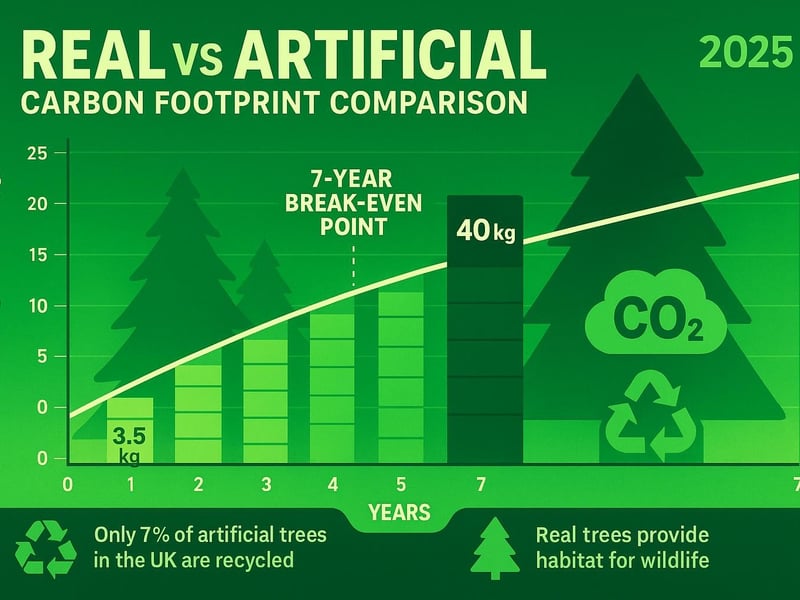
- Carbon footprint analysis: According to The Carbon Trust, a two-metre artificial tree generates 40kg of CO2 equivalent during manufacturing and shipping. A real tree produces 3.5kg if properly recycled, or 16kg if sent to landfill. However, if you use your artificial tree for just 7 years, it becomes the environmentally superior choice.
- Most UK households keep artificial trees for 10-15 years, making them significantly more environmentally friendly over their lifetime. YouGov research shows 54% of Britons believe artificial trees are more environmentally friendly, reflecting growing awareness of this lifecycle analysis.
- Waste stream reduction: The UK generates 6-8 million Christmas trees worth of organic waste annually. While councils offer recycling services, collection rates vary dramatically by region, and many trees still end up in general waste streams.
- Resource efficiency: Real trees require annual farming inputs (water, fertiliser, land use), transportation from farms to retailers, and consumer travel for purchase. Artificial trees use these resources once during manufacturing, then provide decades of service.
- Local considerations: According to Wychavon District Council, if you reuse an artificial tree for ten years or more, it will outweigh the environmental impact of buying real trees annually.
For most UK households, particularly those in urban areas without easy access to local tree farms and guaranteed recycling, artificial trees represent the more environmentally responsible choice over their full lifecycle.
No Mess
Ask any parent what they appreciate most about artificial trees, and "no mess" tops the list every time. Real trees are designed by nature to shed - but in your living room, those falling needles become a daily battle against chaos.
- Daily vacuum duty eliminated - real trees drop hundreds of needles daily once they start drying. That's 3-4 weeks of constant hoovering during the busiest time of year. Artificial trees eliminate this chore completely.
- Water disaster prevention - real tree stands hold 1-2 litres of water, creating constant spillage risks. Pets knock them over, curious children play in the water, stands overflow when you forget to check levels. I've seen water damage claims from Christmas tree incidents that cost hundreds in carpet replacement.
- Sap-free environment - pine sap bonds permanently to carpets, furniture, and clothing. It's notoriously difficult to remove and stains permanently. Artificial trees eliminate this sticky problem entirely.
- Pest elimination - real trees can harbour insects, spiders, and occasionally small wildlife. I've heard customers' stories of everything from aphids to sleeping birds discovered in their Christmas trees. Artificial trees arrive pest-free and stay that way.
The cleanliness advantage extends to takedown too. Packing away an artificial tree involves no trail of needles through the house, no sticky residue to clean, no water stains to address. It's simple, clean, and stress-free.
No Watering
Real Christmas trees are surprisingly thirsty. A fresh-cut tree can absorb up to 4 litres of water daily during its first week indoors. Miss a day, and your festive centrepiece becomes a fire hazard.
- Maintenance elimination - checking water levels, topping up stands, cleaning overflow spills. It's a daily chore throughout the festive season that artificial trees eliminate completely. You position your tree once and you're finished until takedown.
- Travel freedom - planning to visit family for several days over Christmas? Real trees need constant attention, or you risk returning to a dried-out fire risk. Artificial trees let you travel worry-free throughout the season.
- Stand complications avoided - real tree stands are often awkward, prone to leaking, and require specific positioning for stability. They need particular water types (lukewarm initially, then cool) and sometimes additives to extend tree life. Artificial tree stands are simple, stable, and require no ongoing attention.
- Health considerations - standing water in real tree stands can develop bacteria and algae, contributing to indoor air quality issues. This is particularly problematic for households with respiratory sensitivities or young children.
The freedom from daily watering duties means you can focus on enjoying Christmas rather than maintaining your tree. It's one less task during the busiest time of year.
Safer Than Live Trees
Safety should be your absolute priority during the festive season, and artificial trees offer significant advantages over real trees in multiple safety categories.
Fire safety statistics are compelling: Real trees cause over 200 house fires annually, resulting in deaths, injuries, and millions in property damage. The London Fire Brigade reports that Christmas tree fires increase dramatically in January as people dispose of dried trees unsafely.
Real trees become increasingly flammable as moisture content decreases, despite regular watering. A dried Christmas tree can ignite in seconds and engulf a room in flames within minutes. Emergency services report that Christmas tree fires spread faster and burn hotter than most other household fires.
- Artificial tree safety advantages: Modern artificial trees are manufactured with flame-resistant materials. While not fireproof, they resist ignition and burn more slowly than dried organic material, providing crucial extra seconds for emergency response.
- Stability benefits: Real trees can become unstable as they dry out and branches droop under decoration weight. Artificial trees maintain consistent weight distribution throughout the season, reducing tipping risks.
- Allergen elimination: Real trees can trigger "Christmas Tree Syndrome" - respiratory reactions caused by mould spores, pollen, and other allergens. Artificial trees eliminate these health risks entirely, making Christmas comfortable for sensitive family members.
- Structural safety: No sharp needles to injure children or pets. No sap to create slip hazards. No unstable branches that might drop heavy decorations. Artificial trees are engineered for safe family interaction throughout the season.
Are Real or Fake Christmas Trees Better for the Environment?
This question deserves comprehensive analysis because environmental considerations increasingly influence UK consumer choices.
- Lifecycle carbon analysis: The Carbon Trust provides definitive data - if you use an artificial tree for 7+ years, it becomes environmentally superior to annual real tree purchases. Since most UK households keep artificial trees for 10-15 years, they deliver significantly lower environmental impact over their lifetime.
- Production considerations: Artificial trees require energy-intensive manufacturing, mostly in Asia, plus international shipping. Real trees need annual farming inputs (water, fertiliser, pesticides), land use, and transport from farms to consumers.
- Disposal realities: While real trees are biodegradable, disposal success varies dramatically by location. Many UK councils offer recycling services, but collection rates and processing efficiency differ widely. Artificial trees aren't biodegradable, but their decade-plus lifespan means disposal frequency is minimal.
- Resource efficiency comparison: Real trees use fresh resources annually - land, water, chemicals, fuel for transport, consumer travel for purchase. Artificial trees consume these resources once during manufacturing, then provide years of service without additional inputs.
- UK-specific data: Research shows 61% of UK adults plan artificial trees versus just 20% choosing real ones. This shift reflects growing environmental awareness combined with lifecycle thinking rather than simple recycling considerations.
- Expert consensus: Environmental scientists agree that for most UK households, artificial trees represent the more sustainable choice when used for their typical lifespan. The key factor is duration of use - the longer you keep your artificial tree, the better its environmental profile becomes.
For urban UK households without access to local tree farms and guaranteed recycling services, artificial trees deliver superior environmental performance through efficient resource use and longevity.
Making Christmas Better for Modern Britain
After helping thousands of families choose their perfect Christmas setup, I've seen how artificial trees consistently deliver better value, convenience, and peace of mind. The statistics support this trend - 67% of UK households have made the switch, and satisfaction rates continue climbing.
The transformation is remarkable. Families report their Christmas preparations are less stressful, their homes stay cleaner, and they genuinely enjoy decorating more. Parents appreciate the safety advantages, while children love helping without worrying about sharp needles or unstable branches.
Christmas Trees UK offers premium artificial trees designed specifically for British homes and lifestyles. Whether you need a 6 foot Christmas tree for a cosy living room or an impressive 7ft Christmas tree for a grand statement, we provide options for every space and budget.
The choice between real and artificial Christmas trees reflects your priorities and lifestyle. If you value convenience, safety, long-term savings, consistent beauty, and environmental responsibility, artificial trees excel in every category. They don't compromise on Christmas magic - they enhance it by eliminating stress and hassle that can overshadow festive joy.
This Christmas, join millions of UK households who've embraced artificial trees as the smart, modern choice. They deliver all the Christmas wonder with none of the worry.
Frequently Asked Questions
Quality artificial Christmas trees typically last 10-20 years with proper care and storage. I've seen customers using trees purchased 15+ years ago that still look magnificent. The key factors for longevity are gentle handling during assembly/disassembly, proper storage in cool, dry conditions, and choosing quality construction initially. Premium trees often last even longer - some families pass them down to the next generation. Store your tree in its original box or a protective bag, keep it away from moisture and extreme temperatures, and handle branches gently to maximise lifespan.
Absolutely. While a quality artificial tree costs £100-300 initially compared to £40-£150 for a real tree, the economics strongly favour artificial trees over time. By year 7, you're saving money compared to annual real tree purchases. Over a typical 15-year lifespan, most families save £300-£500 plus countless hours of time. Factor in eliminated transport costs, no disposal fees, reduced decoration damage, and eliminated cleaning expenses, and the value proposition becomes even more compelling. It's an investment that pays dividends every Christmas.
Not at all. Today's premium artificial trees use advanced needle technology that creates incredibly realistic appearances. Mixed needle construction combines soft PE needles (moulded from real branches) with fuller PVC needles for volume and depth. Many customers are genuinely surprised by how realistic quality artificial trees look and feel. The secret is investing in quality - budget trees may still look artificial, but mid-to-premium options are virtually indistinguishable from real trees. The consistency and perfect shape often look better than real trees throughout the season.
Consider your ceiling height and room proportions carefully. 6 foot Christmas trees work perfectly in most UK homes with standard 8-9ft ceilings, leaving adequate space for a tree topper and visual balance. 7ft Christmas trees suit larger rooms with higher ceilings and create impressive focal points. For smaller spaces, compact apartments, or rooms with lower ceilings, consider slim or shorter options. Always measure your intended space and account for your tree topper when selecting height.
Yes, artificial trees are generally much safer for families. They eliminate sharp pine needles that can injure small hands or paws, toxic sap that pets might ingest, and falling needles that create choking hazards. The fire-resistant properties make them safer than real trees, which become increasingly flammable as they dry out. Always secure your tree properly to prevent tipping, choose decorations appropriate for your family situation, and supervise young children around the tree regardless of type. The consistent structure and stability of artificial trees make them ideal for active households.
While artificial trees don't naturally smell like pine forests, you can easily create that beloved Christmas aroma. Pine-scented candles, room sprays designed for Christmas trees, or scented ornaments work brilliantly to recreate fresh evergreen fragrance. Many families prefer controlling the scent level rather than dealing with the sometimes overwhelming pine smell from real trees. The artificial tree provides the visual impact while you control the sensory experience to match your preferences perfectly.
Pre-lit Christmas trees come with professional-quality lights already installed, tested, and positioned for optimal coverage. They save 2-3 hours of setup time, eliminate tangled wire frustrations, and ensure even light distribution without dark spots. The lights are typically higher quality than consumer versions and positioned by experts who understand optimal placement. Unlit trees offer complete flexibility for your own lighting choices and family traditions. Pre-lit trees cost more initially but deliver significant convenience value, while unlit trees let you customise the lighting experience completely.
Proper storage extends your tree's lifespan significantly. Use the original box or invest in a quality tree storage bag designed for your tree's size. Choose a cool, dry location like an attic, garage, or under-stair cupboard - avoid damp basements where moisture could damage branches or cause mould. Most trees break down into 2-3 main sections for compact storage. Handle branches gently during disassembly, and consider wrapping delicate sections in tissue paper. Good storage practices can help your tree maintain its appearance for decades.
Definitely. Artificial trees eliminate "Christmas Tree Syndrome" - allergic reactions caused by mould spores, pollen, dust, and other allergens commonly found on real trees. Real trees can harbour over 50 different types of mould that flourish in warm indoor environments, triggering respiratory issues, cold-like symptoms, and asthma attacks. Artificial trees don't collect or harbour these allergens, making Christmas comfortable for sensitive family members. This is often a deciding factor for households with respiratory conditions or severe allergies.
While artificial trees aren't biodegradable like real trees, their 10-20 year lifespan means disposal frequency is minimal. When they do reach end-of-life, the metal components can often be recycled through standard metal recycling programmes. Some councils accept plastic components in recycling streams, though policies vary by area. Many families donate still-usable trees to charities, schools, or community centres before disposal. The key environmental advantage is longevity - one artificial tree replaces 10-20 real trees over its lifetime, significantly reducing overall waste despite not being biodegradable.